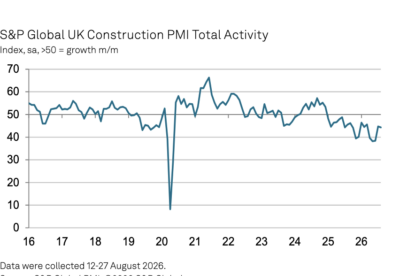




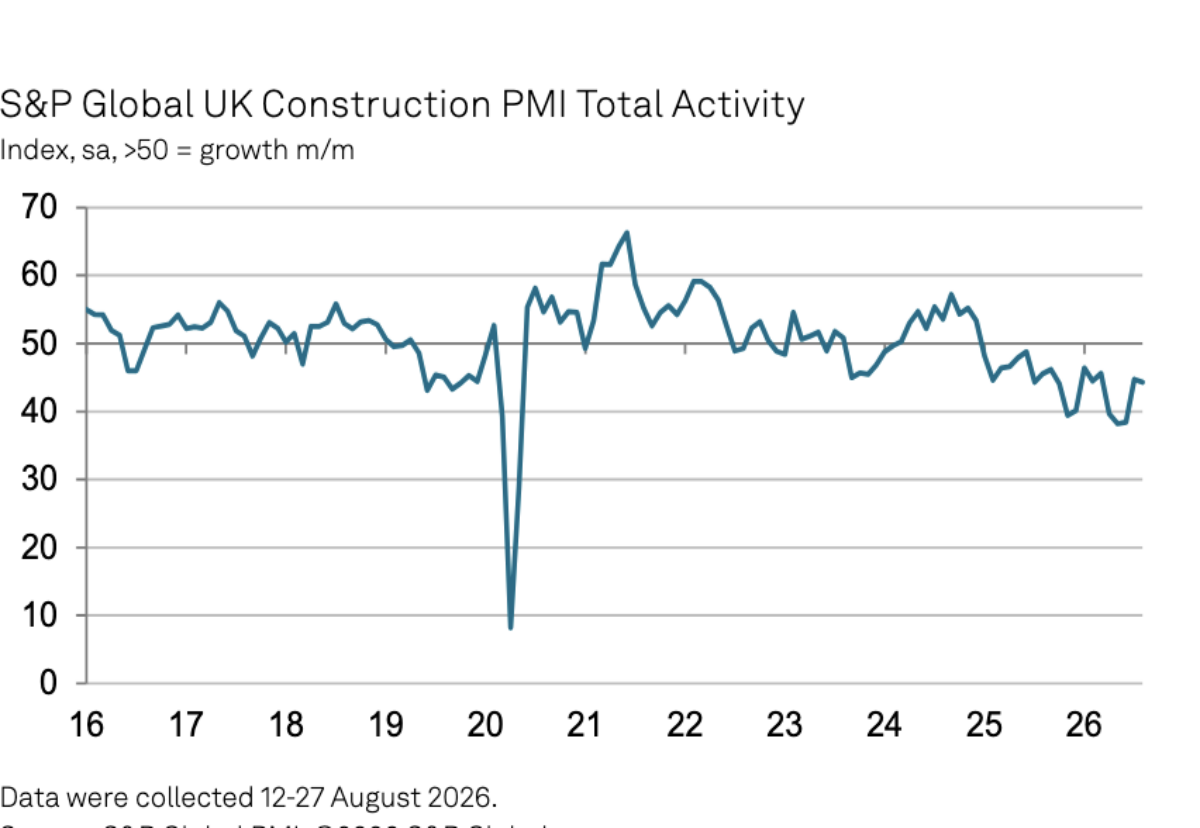
Buyers reported below the neutral 50.0 value for the twentieth successive month amid subdued demand conditions and a reduction in new projects – particularly house building starts.
All three sub-sectors recorded a reduction in construction activity during August, but housing was the only category to register a faster pace of contraction than in July.

The downturn in residential work (index at 37.6) was sharper than seen elsewhere in the construction sector.
Commercial activity (47.8) fell at the slowest rate since January, while civil engineering activity (40.5) decreased to the least marked extent since March.
Construction companies signalled a fall in total new order intakes during August, but the rate of contraction was only modest and the slowest since September 2025.

Firms were still upbeat on balance about the outlook for business activity during the year ahead, but the degree of positive sentiment eased from July’s five-month high.
Around 38% of the survey panel anticipate an expansion of output, while 20% forecast a downturn.
Tim Moore, Economics Director at S&P Global Market Intelligence, said: “UK construction companies experienced another solid reduction in output volumes, with a faster downturn in house building the main reason for a weaker overall performance during August. A sharp and accelerated drop in residential activity more than offset slower falls in the commercial and civil engineering sub-sectors.
.JPEG)
“Sluggish demand conditions and low client confidence, combined with anxiety about the impact of the Middle East conflict, were again factors contributing to lower workloads across the construction sector. Total new business nonetheless decreased to the least marked extent for 11 months amid reports of support from transport infrastructure work and some pockets of vitality such as data centre roll outs and energy sector projects.
“Encouragingly, input price inflation eased to its lowest since February and supply chain performance was broadly stable. Softer overall inflation was recorded in August despite upward pressure on operating expenses from higher fuel bills, logistics costs and raw material prices.
“Business optimism was still subdued, as growth projections for the year ahead eased since July and were much weaker than historic trends. Concerns about geopolitical tensions, lacklustre domestic economic prospects and elevated borrowing costs were all noted as holding back confidence.”
.png)